


2020-12-18


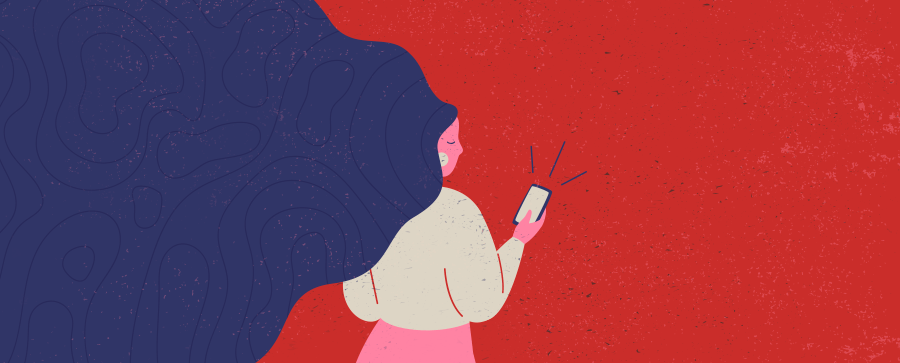
Society is increasingly individualistic. We live from bubble to bubble, with hypnotized eyes fixed on the smartphone, thinking about our accounts, goals and anxieties. Does it affect us what happens around us? When we hear someone, are we really listening to that story, idea or feeling? Are we there, connected? Do we dare, even without thinking the same way, to put ourselves in the other's shoes? Is there empathy?
"For me, the heart of empathy is curiosity," argues Jodi Halpern, a psychiatrist and professor of bioethics at the University of California.
One way to start this text was to travel to Google and write “empathy society”. The results were: “Empathy, the feeling that can change society”, “Empathy: understand why it is so important for your life”, “Times of crisis exposes the need for more empathy in society”, “The importance of empathy for live in society ”and“ Empathy and its power in living in society ”. Before we go to the bone, which is really useful for those who read us, let's start with the concepts.

What is empathy? According to the Priberam dictionary, it is a form of intellectual or affective identification of a subject with a person, an idea or a thing. Throughout this text we will peel the concept of empathy, make the distinction with another social skill that can cause some confusion and we leave some tips to be someone more empathic. “The concepts of sympathy and empathy, despite being widely used, continue to be an object of confusion and are not always used in the most appropriate way”, explains clinical psychologist Joana Simão Valério, in a text on psicologia.pt, a Portuguese-Brazilian magazine of psychology. “We can understand sympathy as a feeling of affinity with a certain person, which leads the individual to establish harmony in the encounter with him. We sympathize with friends and with people with whom we share affinities, interests and values and in which we recognize some compatibility and complementarity with our operation. For its part, empathy implies the ability to position ourselves in the place of the other to understand his internal reality, regardless of the person in question, whether we agree with him or whether we sympathize with him or not. Genuine empathy is at the service of emotional communion, acceptance and respect for the other and for their reality, which implies an attitude of non-judgment and the stripping of one's own prejudices.”
And he adds: “Good empathic ability can be understood as the ability to understand the other having the reality of the other as a framework and never using our subjective experience as a reference. When we put our own feelings on the other, we end up in a confusion between the self and the other ”.
Think of sales. “When salespeople empathize during sales conversations, they automatically improve their ability to engage with other important skills, including building trust, asking questions and collaborating on solutions,” can be read in this text by George Brontén, on the blog Membrain. “When salespeople understand and feel what the customer feels, they gain a deeper insight into the emotional underpinnings of the customer's problem. In other words: empathy helps to build trust; empathy improves the questions asked; empathy helps to define the problem; empathy contributes to the solution; empathy promotes connections between people; empathy helps to close deals and sales.

And how did we get there, anyway?
Slowing down: the salesperson or speaker should not be in a hurry to say what he has to say, empathy flourishes in calm and understanding of the context and the customer, in their doubts and needs. Listening in a deep and active way is essential to generate empathy. If salespeople or whoever is doing the presentation spend most of the time talking, they take time to understand the customer's point of view. Instead, they should let the customer speak more, focusing carefully on what the customer is really saying. Imagine: it is not a word that we usually associate with sales skills, it can be read in Membrain's article. But empathy demands that, we have to be more comfortable in that championship. While slowing down and listening, whoever presents a product or sells an idea should imagine the customer's position, that is, they should ask what it would be like to experience what the customer is experiencing. Empathy.
“Technology has made us spoiled”
Remember the story of smartphones and hypnotized eyes? It is not just us adults who can suffer from being unaware of what is around us. Psychiatrist Boris Cyrulnik said last year, in an interview with "Público", that screens prevent young people from developing empathy and that societies therefore become "brutal".
At TedxPorto above, manager Pedro Miguel Silva talks about the countless features of smartphones that, despite having good things, keep us apart from each other more and explain how we are more and more connected with our global and digital tribes, moving away naturally “The other” who is more real, from day to day, someone who is different, from other social strata, from other ethnic groups, with other interests and tastes. And what does that cause? Empathy is lost. “Technology has made us spoiled,” he says. “Today we feel that we are the center of the world. We opened Facebook and everything that interests us is there. We have to lose and regain that perspective [of real life, less global and digital] and realize that the world does not reconfigure, does not revolve, does not exist around us. ” Finally, this manager talks about the importance of “recovering leisure”, the ability to do nothing. Because? “Leisure is important. The waiting, the delay, the ability to enjoy small moments of life without doing anything, in which we let our mind wander and think about other things is very important. Recovering imagination and empathy ... ”.
Curiosity, remember? A more empathetic attitude, which listens and tries to understand, more identified and sensitive to those around us, will necessarily promote better messages and more effective messengers.
Some tips for working with empathy *
• Talk to strangers.
• Live someone else's life (go to the church, mosque or synagogue that person goes to; visit a village, an underdeveloped country or volunteer; spend time in another neighborhood).
• Align with a cause shared with others.
• Be honest with you; analyze the privileges themselves.
• Talk to people.
• Intervene: donate money to a cause or organize an event in defense of someone or community; defend someone who is being discriminated against.
• Giving voice to others, amplifying their voice.
• Reading books, getting lost in fiction, entering the characters' lives, feeling other points of view.
• Learn from books that describe the lives and struggles of others, not fictional ones.
• Read interviews, watch films and documentaries, understand each other.
• Teach our children to be empathetic. Read to them, question about feelings and characters. Understanding the world through fiction; teach how to combat stereotypes.
• Open mind to listen to others.
• Learning to listen (listening really requires active involvement, that is, body language that indicates interest in listening, eye contact, uncrossing the arms, not interrupting, asking open questions, putting the phone out of reach).
* Note: this list is in the “New York Times” (here) and deserves a more exhaustive reading.

