


2021-04-09


The name of brands sometimes says it all. The name of brands doesn't always say it all. There is not exactly a right approach, there may be mystery or more explicit choices, but there is always some kind of storytelling even in this complex act of choosing the name. For example, Nike is descended from the Greek goddess of victory, thus winking at winners or eventual winners. Another example: Cadillac, after the founder of Detroit, Antoine de la Mothe Cadillac, a French explorer, thus evoking a pioneering spirit. Or, finally, Lego, a diminutive for the Danish phrase "leg godt", meaning "to play well". There are stories in everything we see.
But, of course, we usually don't know the why of the brand names. We don't know the story behind it, who thought of it and why, inspired by what or who, but we do know what they sell or want to do. This is especially true for brands that are already more firmly established in our modern societies and for those that we know by heart what they do and sell.
"Many businesses are known exclusively by their name and logo," explains in this piece in "Forbes" Ruth Agbaji, the CEO of Code Wiz, a school that teaches code and other complicated future topics to children and young people. "Big companies or more established brands with big PR and marketing budgets can get away with this strategy, but for emerging brands with tight budgets, the most powerful PR move is to tell the personal side of the sometimes raw story behind the brand."
For the author, sharing the personal story behind the brand will attract the ideal customers, those people who come to like and admire the person and seed behind the business they now support or follow. In the past, in another piece on this blog, we have mentioned the wonders of oxytocin, that hormone that gives us a good feeling after reading, hearing or seeing a story that somehow relates to us, and the author refers to the same hormone. "When you share the reality, the human story behind the business, it allows people to feel connected to the business," insists Agbaji, who argues that millennials above all are much more interested in brands and businesses that are aligned with their values, so the story and the reason for the brand's existence, packaged by the name, are decisive. What's more, when we share difficulties and successes in creating something, this can inspire those around us, whether inside the organization or even outside, whether they are customers or curious.
Jeff Slater is one of those men who digs into his mind for names that could be a flagship for an organization, brand, or product: "I helped, for over 30 years, name products that needed a creative name that told the story. A toy, for example, can't have just any name, it has to have life, emotion and personality, he explains. "When I think of brilliant branded product names, I think of names like PREVACID, a medicine to prevent acidity [in the stomach]. It's a great example of a brand name that is so simple and yet tells a story with the name." Slater leaves some tips for creating a brand or product name:
- knowing clearly the story you want to tell
- being fond of words and their origins (Latin, for example) helps to make games and mixtures
- not being afraid of those fusions between words
- focus on the word before the font, color or visualization
But there are a few more tips to keep in mind that are essential in this art of dressing up an idea with a name:
- meaning (communicate the essence of the brand)
- be distinctive
- accessible (to say verbally and for interpretation)
- not underestimate the future (the name must be able to follow the evolution of the brand)

A note to that fourth point that talks about not underestimating the future. The world is, as we know, changing every day, values can change, sensibilities ditto. Culture changes. For example, Mr. Potato Head has lost the "mr. so there is no gender associated with it. "Culture has evolved," explained the Hasbro brand.
One more example: a debate has arisen in recent days about Jeep's Cherokee segment because it is an appropriation of the name of a native tribe. There is no shortage of examples of brands with products associated with native communities without any benefit to the same communities. Changing the name of that segment is on the table, because the use of several of those terms may not only not translate into a real gesture of homage as it is referred to, but it may also erase what the story really was: complex racial issues and dramas that resulted from colonialism. This is just one example of how the world evolves and how brands can find themselves having to take a step forward or to the side by changing something, even the name of perhaps the most famous SUV you have in the window. We have already seen in a previous text some reasons and explanations for rebranding.
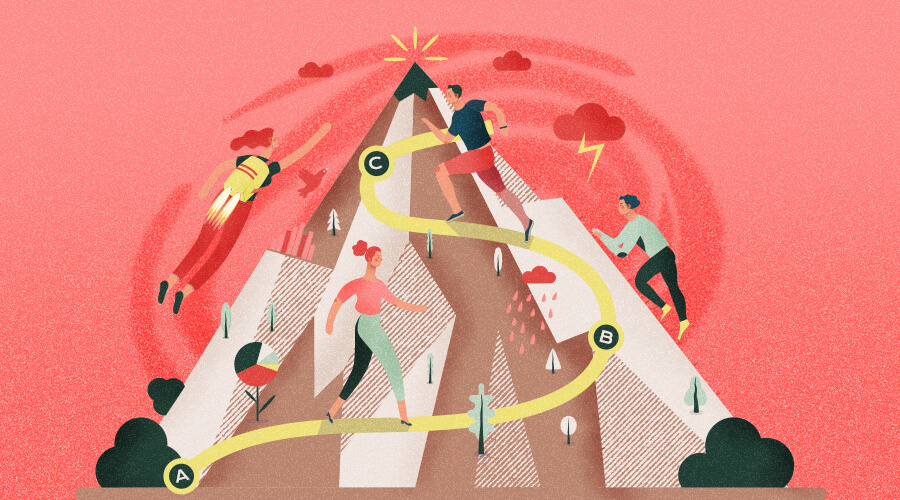
In short, brands cannot forget purpose, vision, mission and values, that's the ABCs. But the name is also an important asset, it works like a special key to the lock that opens the door to the world. Making the history of the brand and the name known can be decisive for an enticing communication that meshes with reality, explaining what you are coming to.

